Performance Marketing
What food delivery app commission really costs, and how to win back direct orders
Head of Marketing Team7 min read
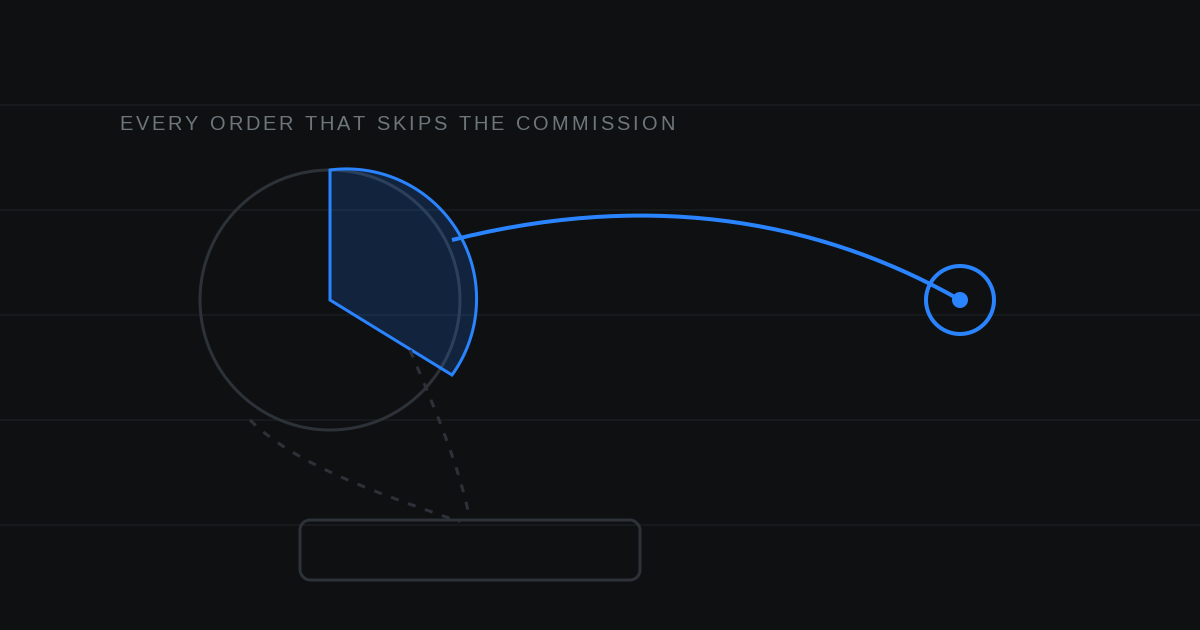
Delivery apps can take 15 to 30 percent of every order, and a repeat customer often costs you that commission a second time. What drives the cost, and five practical ways to win back direct orders.
Delivery apps typically charge 15 to 30 percent commission on every order, and that is before payment processing and promotion costs. Worse, a customer who first finds you on an app usually orders through that app again, so you pay the commission on the same customer every time. The fix is not to leave the apps. It is to give that repeat customer an easier way to come back direct, so you only pay the commission once per customer instead of every time.
The problem, in plain terms
The dining room is doing fine. The kitchen is busy on a Friday night. Then the monthly statement from the delivery app arrives, and a quarter of everything sold through it is gone before it reaches the business. The owner does the maths on a strong month and realises the app took more than the rent did.
This is not a reason to panic, and it is not a reason to quit the apps either. Delivery platforms bring real customers who would otherwise never have found a small restaurant, a cafe or a cloud kitchen. The problem is narrower than "delivery apps are expensive". It is that most businesses let every customer, including the ones who already know and like them, keep ordering through the most expensive channel available.
Why the commission costs more than the headline number
It is not a flat fee. Commission rates vary by plan and by order type. Uber Eats, for example, publishes three standard plans with marketplace fees of around 20, 25 and 30 percent, plus a separate pickup fee, and notes that rates can differ by city and by market. Treat any single number you read, including the ones in this article, as a planning estimate, not a quote for your account.
Promotions are often part of the deal. Many platforms rank discounted listings higher inside the app, so a business that wants visibility ends up giving away margin on top of the commission, not instead of it.
The same customer can cost you twice. The commission buys you a new customer once. If that person has no easy way to order direct next time, you pay the introduction fee again on every single reorder, for as long as they stay a customer.
Card and payment fees still apply. On your own website or a phone order, you pay a small payment processing fee, typically a few percent. That is usually far below a delivery app's combined commission, which is the whole point of building a direct channel alongside the apps rather than instead of them.
Five ways to win back direct orders
1. Make direct ordering as easy to find as the app
If someone searches your business name, the delivery app listing often appears before your own website does. Claim and complete your Google Business Profile with a working link to your own site or ordering page, and keep your opening hours and menu current there. This is the same local visibility work covered in our SEO services, and it is the first place most customers look before they open an app.
2. Put the direct option where people already are
Do not expect customers to go looking for a second way to order. Put the link in your Instagram bio, pin it as the first story highlight, and add it to every post caption that shows food. WhatsApp works the same way: the WhatsApp Business Platform is built so customers can browse and place an order inside a chat they already have open, which removes the need for them to download anything new. Our social media marketing team treats this kind of channel shift as a standard part of running a food business account, not a special project.
3. Give a reason to try it the first time
Habits are hard to break without a nudge. A small saving, a free side, or faster pickup for direct orders gives a loyal customer a reason to change channel at least once. After the first good experience, most people keep going back to whichever channel was easiest, and a well built direct order page on your own site usually wins that comparison. This is exactly the kind of page our web development work focuses on: fast, simple to order from, and built so you are not paying a third party a percentage to host it.
4. Capture contact details so you can reach them again
A delivery app owns the customer relationship by default, because it holds the phone number and the order history. A direct order, even a simple one through WhatsApp or your website, is a chance to save that contact so you can message them again without paying a platform for the introduction every time. Keeping repeat customers without constantly discounting is covered in more detail in why cost per lead is usually the wrong number to optimise, which looks at the same channel economics from the advertising side.
5. Track the number instead of guessing
Most businesses can say roughly how many orders came through each delivery app last month, because the app tells them. Far fewer track how many came through their own number or website, because nobody is sending a statement for that one. Start counting both, even roughly, so you can see the shift actually happening rather than assuming it is. Slow replies on a direct channel undo this work quickly; see WhatsApp enquiries not turning into sales for the most common way a promising direct order gets lost before it is confirmed.
What the shift looks like
These are round, illustrative numbers to show the mechanism, not a client's results.
| Metric | Before | After |
|---|---|---|
| Orders through delivery apps | 500 a month | 400 a month |
| Orders through your own channels | 0 a month | 100 a month |
| Commission on app orders | 25% | 25% |
| Payment processing on direct orders | — | around 3% |
| Blended cost across all orders | 25% | around 21% |
Nothing here assumes the apps disappear. A fifth of the volume simply moves to a cheaper channel, and the blended cost across every order drops by several points without a single price increase.
What to do this week
- Check your Google Business Profile shows your own ordering link, current hours and an accurate menu.
- Add a direct-order link to your Instagram bio and your next three posts that show food.
- Pick one incentive for a customer's first direct order, and decide how long you will run it before reviewing it.
- Start a simple count of direct orders alongside the app orders you already track.
- Save the contact details from every direct order so you can message that customer again later.
Common questions
How much commission do delivery apps actually charge? It varies by platform, plan and market. Published ranges are commonly between 15 and 30 percent of the order value, sometimes with a separate pickup or delivery fee on top. Check your own account statement for the exact figure, since advertised rates and your contracted rate can differ.
Should a restaurant stop using delivery apps completely? Usually not. Apps bring in customers who would never have found a small business otherwise, and for many kitchens that discovery is worth the cost. The aim is to stop paying that cost on repeat customers who already know you, not to walk away from new customer discovery.
Will a discount for direct orders hurt my margins? A one-time incentive to try a new channel almost always costs less than the commission it replaces over several reorders. Run it for a fixed period, measure how many customers stick with the direct channel afterwards, and adjust from there rather than running it forever by default.
How long does it take to see fewer orders going through delivery apps? Most businesses see the first direct orders within a few weeks of adding a visible link and a reason to use it. The bigger shift, repeat customers defaulting to the direct channel, usually takes a few months of consistent reminders before it becomes the habit.
Do I need a full online ordering system to get started? No. A WhatsApp number with someone who replies quickly is enough to begin. A dedicated ordering page on your own site becomes worth building once direct orders are a meaningful share of your volume.
Want help working out which channel is actually costing you the most? Talk to us about your own order mix, or see how our SEO and social media marketing work together to make the direct channel the easy choice.
- Delivery apps
- Restaurant marketing
- Direct orders